Make governed data easier to understand
Unified Catalog, Data Map and data governance
Ownership, scans and meaning first — so the catalogue is still used after go-live.
Make governed data easier to understand
Ownership, scans and meaning first — so the catalogue is still used after go-live.
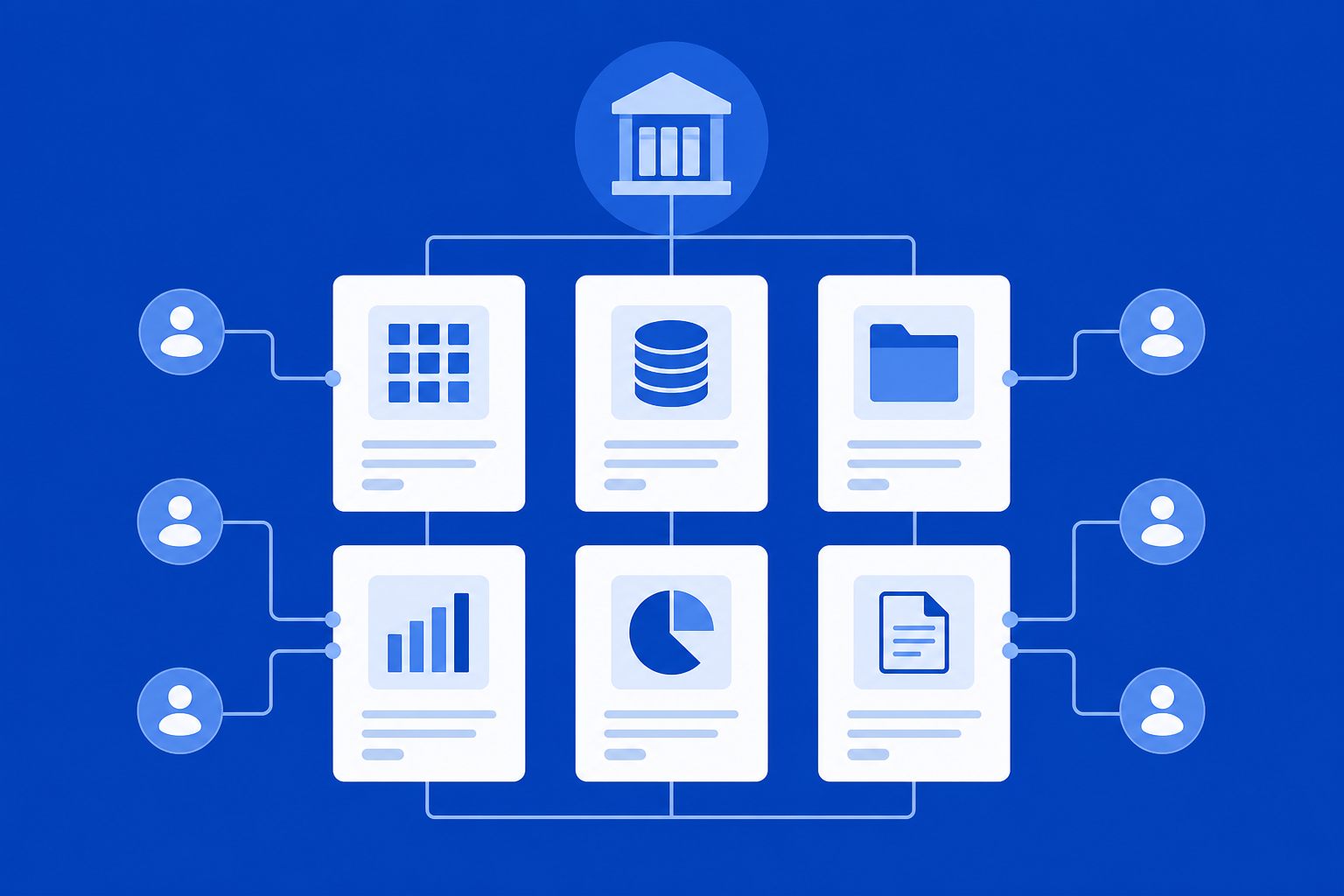
Data governance fails when ownership lives in a spreadsheet, definitions differ by department, and nobody can say which table is trusted. People still look for a data catalogue. In Microsoft Purview that work sits on Data Map (sources, scans and the metadata they produce) and Unified Catalog (domains, ownership, glossary and the operating model). We treat them as one implementation, not three brochure pages.
Ghani Governance helps UK organisations decide domains, owners and operating routines, register and scan the sources that matter, and configure Unified Catalog around those decisions. Microsoft documents the product in the Data Map and Unified Catalog documentation; we do the design, configuration and handover those pages do not provide. See also the data governance overview.
Current owners, glossaries, forums and whether anyone will actually maintain a catalogue.
Which sources to register first, scan scope, and classification so the map is populated with assets the business will recognise — not every database on day one.
Shared terms for the handful of business concepts that cause arguments today, attached to assets rather than left in a slide deck.
A structure small enough to survive the first reorganisation, with named owners who know they are owners.
The catalogue experience that matches the agreed model — search, data products where they help, and stewardship that is not the demo tenant.
Review cadence and change process so scans, glossary and ownership do not rot six weeks after go-live.
All Purview services · UK and Greater Manchester service area
| Service | Planning range | Typical mid-point |
|---|---|---|
| Governance readiness assessment | £2,000–£4,000 | £3,000 |
| Focused catalog pilot | £4,000–£8,000 | £6,000 |
| Multi-domain governance implementation | £8,000–£18,000 | £13,000 |
Indicative only. Domain count, stakeholders, sources and maturity change the figure. Not a quote.
Ownership, definitions, current catalogue habits, and which sources already exist.
Priority domains, first sources to scan, and the outcome the pilot must prove.
Domains, responsibilities, glossary terms, scan strategy.
Data Map registration and scans, then Unified Catalog around the agreed structure.
How owners review assets, glossary and scans so the catalogue stays useful.
No. A catalog without owners, definitions and a review routine is an inventory. Governance is the operating model. Purview is the system of record for that model once people agree it.
Usually not. We pick domains where ownership is available and the business can feel a result, then expand.
Data Map is the technical foundation: registered sources, scans, and the metadata those scans produce. Unified Catalog is the business experience built on that map — domains, ownership, glossary terms and data products people can actually use. UK organisations still look for a data catalogue; in Purview that work is one implementation, not three products to buy separately.
A scoping conversation about what you need to protect, what is already configured, and what must not break.